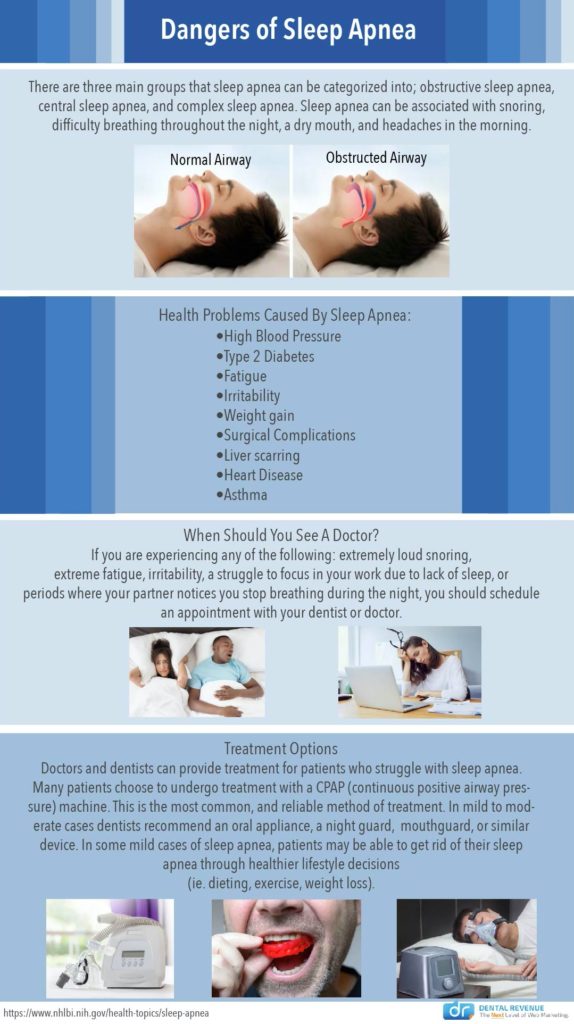
Dentistry is not limited to the cleaning and care of teeth. At Howard County Smiles, one of Dr. Ray Becker’s special interests is treating sleep apnea and sleep-related breathing disorders. With his advanced training and certification, Dr. Becker can provide lasting relief from snoring and sleep apnea symptoms. He uses up-to-date and advanced dental care technology to treat loud snoring and sleep apnea in Columbia, MD.
Many people snore when they sleep. But snoring isn’t always a sign of a more advanced issue. In some cases, snoring can be a sign of a medical issue called Obstructive Sleep Apnea (OSA). When obstructive sleep apnea happens, patients stop and start breathing throughout the night. The throat muscles collapse and relax and block the airway.
Many patients don’t even realize they have sleep apnea. However, you must seek treatment if you notice any symptoms or if your partner notices changes in your sleep patterns. Contact us if you or your partner notice snoring, gasping for breath, or choking sounds during sleep.
Our newly renovated dental office in Columbia, MD, welcomes patients recently diagnosed with sleep apnea or a sleep disorder. We offer an alternative treatment to those intolerant of CPAP.
Why is Snoring a Problem?
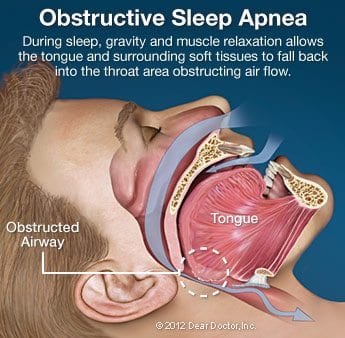
Snoring by itself is not a major medical concern. However, snoring may indicate a more serious condition. Snoring occurs when the soft tissue structures of the upper airway collapse and vibrate during sleep. This produces sound that we call snoring.
The prevalence of sleep apnea increases with age. Doctors estimate that as many as 50% of elderly men and women suffer from the disorder.
What Is Sleep Apnea?
Obstructive sleep apnea (OSA) is the most common sleep-related breathing disorder. Patients who suffer from OSA stop breathing repeatedly during their sleep. A blockage in the airway, when the soft tissue in the back of the mouth collapses, causes OSA.
A person with sleep apnea may wake 50 or more times per hour, almost once a minute. They usually have no memory of it happening.
These awakenings, called micro-arousals, last just long enough to restore muscle tone to the airway so you can breathe. Unfortunately, all those micro-arousals preclude deep and restful sleep. This means you wake up in the morning still feeling tired.
Signs and Symptoms of Sleep Apnea: What to Look Out For
Obstructive Sleep Apnea is a serious matter as it can lead to heart problems and other health issues. You may have OSA if you snore and also suffer from any of the following common symptoms of sleep apnea.
- Excessive daytime sleepiness
- Irritability
- Poor memory/confusion
- Accident proneness
- Night sweats
- Morning headaches or migraines
- High blood pressure
- Obesity
- Waking up suddenly gasping or choking
- Dry mouth (especially in the morning)
While sleep apnea can happen to anyone, certain factors make it more likely. Many of these risks are within your control. Things like maintaining a healthy weight, avoiding alcohol before bed, and quitting smoking can significantly lower your chances of developing sleep apnea. Even small lifestyle changes can improve your sleep quality and overall health.
Common risk factors for sleep apnea include:
- High blood pressure
- Obesity or excessive weight
- Small airway
- Smoking
- Diabetes
- Family history of sleep apnea
Pauses in breathing during sleep can increase your blood pressure and reduce your blood oxygen. If you have diabetes, you are at an increased risk of dropping glucose levels if you have sleep apnea.
Bad habits like smoking not only relax the throat muscles but also increase inflammation in your airway. Physical attributes also have an affect on OSA. Excess fat or folds in the neck create a narrower airway, leaving less room for proper airflow.
Snoring and Sleep Apnea Treatment in Columbia, MD
From simple devices to advanced therapies, we tailor snoring and sleep apnea treatments to each patient’s condition. Certain lifestyle changes can help to alleviate the symptoms of OSA, including:
- Weight loss
- Smoking cessation
- Eliminating alcohol and sedative use
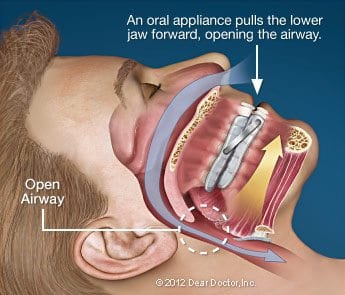
While the CPAP is the gold standard for treating OSA, patients with mild to moderate cases prefer oral appliance therapy. An oral appliance is small, discreet, and comfortable. We see better compliance and better results because of it. We can fabricate a custom-made sleep apnea appliance for you to wear during sleep.
Think of these custom dental devices like a comfortable night guard that does double duty. While you sleep, they hold your airway open to prevent snoring and breathing pauses. The magic happens when you wear it consistently. Night after night, it helps safeguard your heart health and energy levels.
Our oral appliances include customized splints, mouthguards, and night guards. Oral appliances:
- Reposition the lower jaw, tongue, soft palate, or uvula
- Stabilize the lower jaw and tongue
- Increase the muscle tone of the tongue